Missed a Day? Making a Motivation Short with Opus 5.5
October 4, 2026 · AI & Building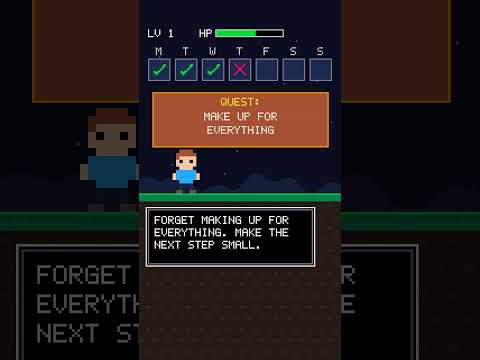
This post started with a simple message: a missed day does not erase the days you showed up. But the other reason I wanted to share the Short is how it was made. My Opus 5.5 experiments let me explore animated stories by describing the idea, watching a result and giving concrete notes, instead of drawing every frame myself.
That is an interesting starting point for people who do not usually make graphics. You can begin with words and a visual idea. The model can write animation code and help build a render; you still choose the story, inspect what it made and decide whether it is worth publishing.
The pixel-game Short below is a later visual treatment of the same restart script. The original experiments used a Paint-style treatment. Those are versions of one message, not proof that one model or look always wins.
What Opus 5.5 changed about the process
The useful shift was getting from an idea to something I could react to. In the original “miss a day” experiment, I compared an initial draft, an Opus rebuild using the channel's existing animation engine, and a fresh Opus 5.5 high-effort run with a fixed script and reference material.
I liked some of the fresh run's animation ideas but wanted to keep the channel's Paint identity. The next version combined them: a stamp could become a paste action, removing something could become Undo, and motion could use familiar editing actions. The model supplied a way to build the idea; I supplied the preference about what belonged in the finished piece.
You can watch the original Paint-style Short alongside the pixel-game version above. Keeping the words fixed made the change in visual treatment easier to see. It was still a small experiment, with differences such as loudness, not a controlled claim about which style will grow a channel.
Start with a tiny animation brief
If you do not normally create motion graphics, start with one action the viewer can understand. Do not ask for a complete brand package or a dozen effects. Describe what changes on screen, what that change means and how the ending resolves it.
Here is a starter brief you can adapt. It is an example based on the lesson, not the verbatim prompt used for these videos.
Create a short animated story about returning after a missed day.
Audience: someone who feels they have ruined their whole week.
Opening: one missed day appears to cancel the entire week.
Turn: the completed days remain; only the missed day is empty.
Ending: choose one small action and continue.
Keep the words fixed while proposing two visual treatments.
Make the text easy to read on a phone.
Use original graphics and licensed or original sound.
Explain what is needed to render it, then produce a reviewable first version.
You still need a working rendering setup or a tool that can run the generated code. Describing an animation is an easier entry point than learning every drawing operation first; it does not make the setup, debugging or review disappear.
Review the story before adding effects
- Can you understand the opening immediately? The image should establish the problem, not just look busy.
- Does the ending answer the opening? In this story, continuing is the payoff.
- Can someone read the words on a phone? Slow down or remove material when the text cannot land.
- Did the render keep the facts and script intact? Watch the exported file, including the final moment.
- Are you using the result or just the model's description of it? A successful render is not the same as a successful Short.
That last point mattered in my experiments: checking frames caught a payoff that was not visible as intended, even though the video file decoded successfully. The creative judgment remains yours.
For the broader model comparisons, revised prompts and cost caveats, read my AI video experiment notes. The rest of this page is the practical restart checklist behind the Short.
1. Name the next visible action
Replace “get back on track” with something you can actually finish. Open the document and write one sentence. Put the shoes by the door. Wash one plate. Choose an action that starts the activity, rather than another round of planning about it.
Keep the useful part of the original goal, but reduce the size of today's entry point. You can do more after starting. You do not need to promise a catch-up marathon before doing anything.
2. Find the obstacle you can change
Ask what stopped you last time without turning the answer into a character judgment. Was the next action unclear? Was the file hard to find? Did the task require a long uninterrupted block you never had?
Choose one practical change: leave the document open, gather what you need, or write the first step on a note. If the obstacle was a genuine lack of time, schedule a smaller action rather than pretending tomorrow will automatically be empty.
3. Restart without repaying an imaginary debt
For an optional habit, missing yesterday does not require doubling today's target. Start with the version that fits today. Real deadlines and commitments are different: renegotiate those directly instead of using this checklist to ignore them.
Then stop long enough to notice what actually happened. Did the small start help you continue, or was the task still too large? That observation is more useful than deciding whether you are a motivated person.
4. Leave one next step for your future self
Before closing the task, write a specific continuation: “add the example after paragraph two” is better than “finish article.” A clear starting point removes one decision from the next session.
Copy this restart note
The thing I want to return to: name the activity.
The next action I can finish today: one visible step.
One obstacle I can remove: a change to the task or setup.
Where I will continue next: an exact starting point.
When the checklist is the wrong fix
A task may need fewer commitments, help from someone else or a decision to stop doing it. Making an unreasonable plan easier to restart does not make it reasonable. Use the checklist to test a small next step, then adjust based on what happens.
This connects to my notes on intentional growth and feedback loops: the goal is to learn from doing, not protect a perfect streak. Watch the Short when you want the quick reminder; return here when you need to choose the action.
Get the build notes
Real AI experiments — what shipped, what failed, and the setups behind them. Straight to your inbox.
No spam, unsubscribe anytime.
You're in — check your inbox for a welcome note.
Common questions
Should I double the next habit session to make up for a missed day?
For an optional habit, this checklist suggests restarting with a step that fits today. Real deadlines and commitments still need to be handled directly.
What if I keep missing the same task?
Reconsider the size of the task, the obstacles and whether it belongs in your schedule. A smaller first step cannot fix every unreasonable commitment.